

What does Chagee and Chicken Rice have in common?
Disclaimer: This article reflects the opinions of the writer and shall not act as business advice. We will not be responsible for the damages and losses that arise from this article.
If you get off at Bugis station there will be a Chagee at Raffles Specialist Centre. Go one more stop to City Hall and there will be one at Raffles City mall. Change one stop and go to Dhoby Ghaut and you will find another store at Plaza Singapura. Go one more stop to Somerset and you will find one at Orchard Gateway. There is so much Chagee in Singapore, to the point people will ask, how many more Chagee stores will open?
On the other hand, in Tokyo, we have chicken rices in various places in Tokyo. Call it Suginami, Roppongi, Chiyoda, and so on.
You might be wondering, why I am writing about Chagee and Chicken Rice. These sound like they have nothing in common. But I would say they do.
Chagee: Different Logo, Different Name, Same Identity
Initially, before Chagee is around in Singapore, we have a huadan actress as the logo of the so called Ba Wang Cha Ji, the former name of Chagee. But then the brand exited the little red dot, and reentered the market using a different name, Chagee. Yes, not only the logo is modernized to that familiar white and red color we see in shopping malls, the spelling of “ji” is modernized to reflect the “Gee” in the Chagee.
From this alone, I learned two things:
- Chagee doesn’t cast away the Mandarin Chinese language which is an integral part of the brand during the rebranding, it embraces it and new branding styles that honors the language. Firstly, I won’t say that it’s wrong to rebrand Chagee to some English word. But I feel that changing “Cha Ji” to “Chagee” is part of the effective branding and why it stands out to normal consumers. People don’t feel the ick with the branding, they find it interesting. The same goes with the menu, in which they have the signature Bo Ya Jasmine Milk Tea, which is derived from an ancient Chinese story.
- By embracing modernity Chagee doesn’t reject its traditional roots. It still preserves its huadan actress image as seen in its new logo.
Chicken Rice: The Singaporean Star
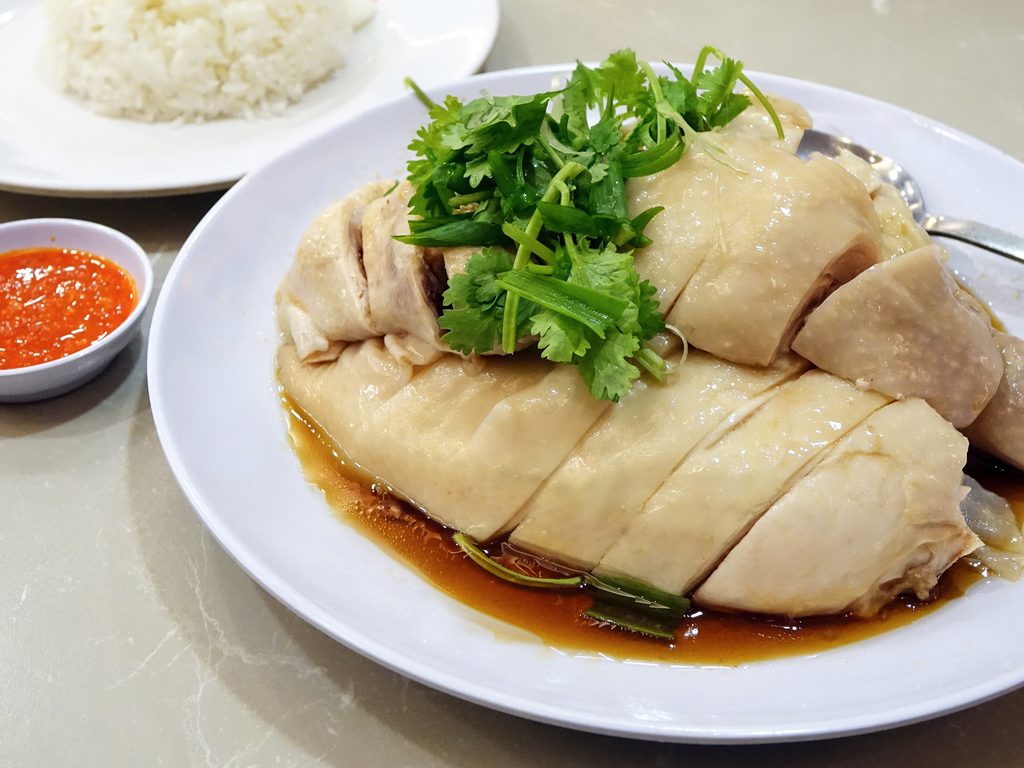
How about chicken rice? It’s a staple in Singapore Hawker Centers. Be it Maxwell or Chinatown, it’s a favorite by locals and overseas visitors alike. When Chatterbox announces its expansion to Roppongi, Tokyo, it mentioned they used chickens from Japan instead from Singapore. Training was done at overseas branch secondments and staffs were trained to make sure they follow the original recipe.
From this expansion, I learned that Chatterbox is not trying to abandon their Singapore heritage at all. It embraces it. Of course, it is difficult to maintain the Singapore taste due to import constraints (importing Malaysian/Singaporean Chicken), hence they had to adjust with Japanese chicken. However, they are still committed to preserve the Singaporean taste, which is well received in Japan.
What Does This Mean?
I feel this is what business owners can do to their business, especially if their business is rooted in traditional culture. I sense that some business owners might think that their products are “out-dated” because they are not modern. But just because it’s rooted deep in culture, doesn’t mean it cannot be modern. Look at calligraphy brushes by Lam Sam Wick in Taiwan for example. The same bristles used to create calligraphy artworks are also transformed to make up brushes, which has successfully attracted young ladies to the store. Japanese paper (Washi) is transformed into ornaments and water-repellent bags (Psst, we sell it too here!), giving new live to the material.
I think, what we can do is to also be flexible in our business. Rather than being persistent in producing just one product and nothing else, try venturing into other products based on what you mainly produce. That way, your customers and normal consumers will not get bored, and this will create new channels and avenues for new possibilities.
If you are thinking of how to modernize your product, we Vintage Management can help you.
With the know-how from helping 500 companies to expand overseas, we can become the suitable partner for you to expand overseas as well.
Contact us here for a free discussion.
Reference
The Japan Times (2026) ‘Slowly but surely, Tokyo is becoming a hot spot for chicken rice’, 16 August.
Taiwan Panorama (2013) ‘New Face for an Old Firm – Lam Sam Yick’, March.
New Straits Times (2022) ‘Bawangchaji Malaysia rebrands as CHAGEE Malaysia, opens new flagship store’, April.